
Dawn Heiman, AuD
|
Nov 6, 2025
|
2 min read
How is Ear Wax Related to Hearing Loss?
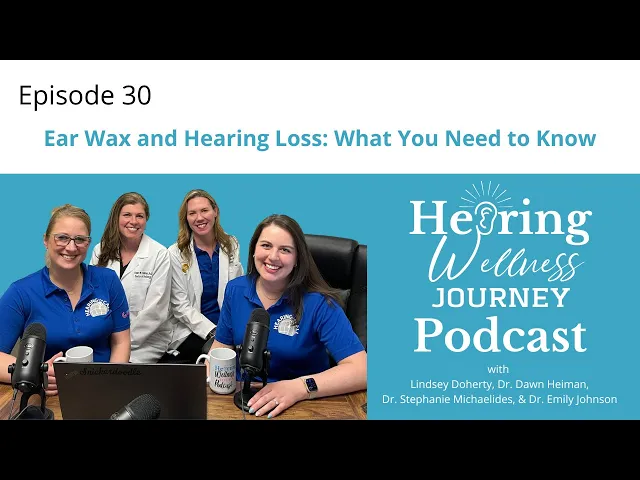
Ear Wax and Hearing Loss: What You Need to Know
Ear wax is normal—and useful—but excessive buildup can temporarily reduce hearing and interfere with devices like earbuds and hearing aids. In this conversation, our clinicians explain what earwax is, how it forms, and the safest ways to remove it without risking injury. Content is drawn from Episode 30 of the Hearing Wellness Journey Podcast.
Click here to watch the podcast:
What Causes Ear Wax?
Ear wax (cerumen) is a mix of oils, skin, and debris produced by glands in the ear canal. Genetics, canal shape, and habits (earbuds, hearing protection, or hearing aids) can all influence buildup. Skin migrates outward from the eardrum like a conveyor belt; devices that block the canal can slow this process, letting wax collect. Some people naturally make drier or stickier wax—both can be normal.
Ear Wax Removal
At home, softeners (e.g., carbamide peroxide drops) can loosen hard wax, but softened wax still needs to come out. For rock-hard plugs, in-office softening and careful removal may be necessary. Avoid Q-tips—they can bruise the canal or push wax deeper. And skip ear candling: it’s not proven to remove wax and poses a burn/fire risk. When in doubt, consult a licensed audiologist to choose a safe plan for your ears.
How to Manage, Remove, and Prevent Buildup
Use a clinician-recommended softener for several days before a scheduled cleaning if you tend to form hard plugs.
If advised by your provider and you have no eardrum perforation or tubes, gentle warm-water rinsing in the shower can help with maintenance.
Limit canal “poking and prodding.” Follow the rule: nothing smaller than your elbow in your ear.
If you wear hearing aids/earbuds, set a routine check—wax guards and periodic cleanings can prevent “sudden blockage” days.
When to See an Audiologist
Schedule an exam if you notice sudden fullness, decreased hearing, feedback from hearing aids, pain, drainage, a foul odor, or if you suspect infection (foamy, wet debris). Audiologists can safely evaluate and remove wax and will refer to primary care or ENT when infection or another condition is suspected. No medical claims are made here; individualized care matters.
Key Takeaways & Tips
Earwax protects the ear; problems arise when there’s too much.
Softening isn’t the same as removal—plan for extraction.
Avoid ear candling and Q-tips in the canal.
Set a proactive cleaning cadence (often every 3–6 months for “wax producers”).
Meet the Experts
Dr. Dawn Heiman – Audiologist and host, pioneering best-practice treatments in Illinois and across the United States.
Dr. Emily Johnson – Audiologist specializing in advanced diagnostic testing and hearing care.
Lindsey Doherty – Patient care coordinator, guiding patients through treatment and support.
Take the Next Step
If earwax is affecting your hearing or quality of life, begin with a complimentary consultation to explore whether our practice is the right fit for you.
For more episodes and resources, visit the Hearing Wellness Journey Podcast website 👉 Visit: hearingwellnessjourney.com/podcast

Lindsey Doherty, HIS
As the Clinical Treatment Coordinator and Hearing Instrument Specialist, Lindsey can often be seen in the common area to help the flow and function of the office or in appointment spaces helping patients with cleaning, or repairing hearing aids. She also makes sure that our patients' hearing devices and all the necessary parts are ordered accordingly so patients you have the best experience possible
Popular Blogs

Dawn Heiman, AuD
|
Nov 6, 2025
Does Untreated Hearing Loss Cause Dementia: Ear to Brain Connection
Separating fear from facts about the ear–brain connection
Read More
Dawn Heiman, AuD
|
Nov 6, 2025
The Power of Programs: When Should I Change Programs on my Hearing Aids?
Are you getting the most out of your hearing aid programs? Learn when to switch settings for clearer speech, better music quality, and less background noise.
Read More
Dawn Heiman, AuD
|
Nov 6, 2025
Why Do Hearing Aids Have Bluetooth, and Do You Need It?
Do hearing aids need Bluetooth to work? Learn how streaming, phone calls, and app control enhance accessibility—without being required for performance.
Read More
Dawn Heiman, AuD
|
Nov 6, 2025
Are Four Ears Better Than Two? Why a Companion is So Important at Your Appointments
Four ears really are better than two. Learn why bringing a companion to your hearing appointment leads to better understanding, stronger support, and better outcomes.
Read More
